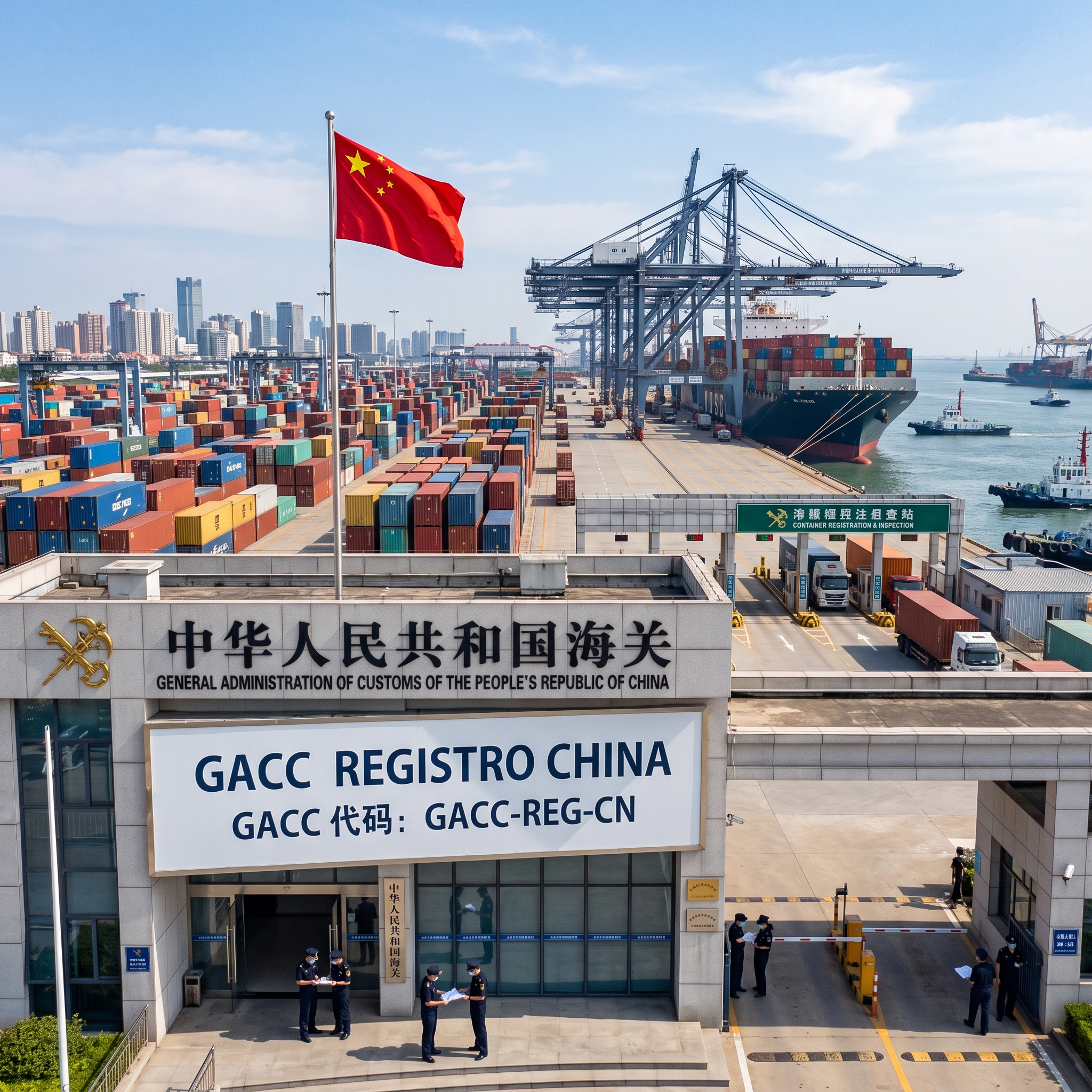
GACC registration: Decrees 248, 249 and the new Decree 280 for exporting food to China
Since 2022, no food enters China without a plant registered with GACC, China’s customs authority. And since June 1, 2026, the registration changed its legal basis: Decree 280 replaced the old Decree 248. Understanding which number your company needs — and who must recommend you — is now the first step of any sale to China.
The three decrees that organize market access
Decree 249 (2022): registration of the exporter or agent with GACC’s food safety bureau — a company-data filing with annual renewal. Decree 248 (2022–2026): registration of manufacturers, processors and storage facilities in the country of origin through the CIFER platform, with a registration number that must appear on the labeling. Decree 280, in force since June 2026: the new framework for registering overseas food producers — it updates the processes, categories and timelines of the old 248, without repealing the 249.
Official recommendation or self-registration?
China splits food into two routes. Sensitive categories — meat, dairy, aquatic products, poultry, eggs, honey, among others — first require a recommendation from the exporting country’s sanitary authority (SENASA in Argentina, SAG in Chile, MAPA in Brazil, SENASICA in Mexico) before GACC accepts the plant. The rest can register directly in CIFER with their own documentation. Your HS code defines the route: every registration starts with correct tariff classification.
The CIFER process, step by step
1) Create your account on the CIFER portal, available in English and Chinese. 2) Classify your product by HS code. 3) Assemble the file: sanitary license, HACCP or ISO 22000, plant layout, product list and traceability evidence. 4) Submit the application — typical review takes 10 to 20 working days. 5) Receive the number, valid for 5 years, and print it on inner and outer packaging. Key point: only manufacturers and processors can register; a trader without its own plant cannot protect its market with a GACC number.
The mistakes that cost a container
Most rejections come from paperwork, not inspection: shipping product from an unregistered plant; Chinese labeling that fails GB 7718; changing company data without updating the registration; or mixing up the exporter registration (249) with the plant registration (280). An expired number or a mistranslated label turns an entire season into a problem in Shanghai or Shenzhen.