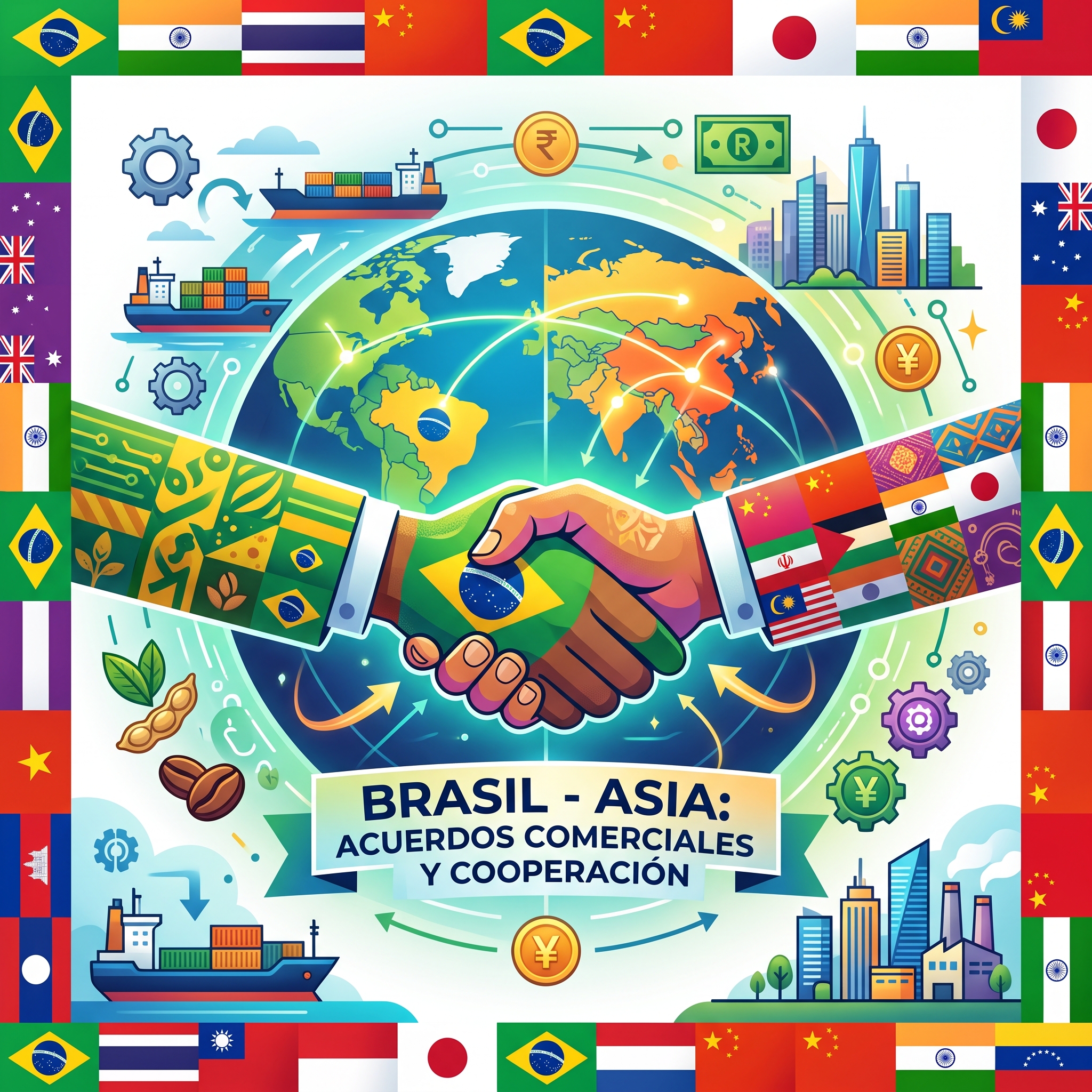
Brazil and Asia in 2026: Singapore in force, Vietnam under negotiation and the portfolio already moving
2026 is the year Mercosur stopped looking only to the Atlantic. Singapore has applied to Brazil since August 1; Vietnam held its first negotiating round in Buenos Aires in late August; South Korea created a joint working group in July, and Japan opened formal talks at the bloc’s summit. For Brazilian companies, the Asian map is no longer theoretical: there are real preferential tariffs on the table.
Singapore: the agreement already in force
Signed in December 2023 — Mercosur’s first with Southeast Asia — the Singapore FTA entered into force in stages: Paraguay in February and Uruguay in March 2026, Brazil on August 1, and Argentina ratified it on August 27. Singapore immediately liberalizes 96% of Mercosur tariff lines, while the bloc phases down nearly 96% over up to 15 years. Two details matter: the anti-triangulation rules (designed against Chinese goods relabeled in Singapore) and the city-state’s value as a logistics and financial hub for all of ASEAN, more than as a final market of six million people.
Vietnam: the preference deal just starting
At the December 2025 summit in Foz de Iguazú, Mercosur announced the opening of negotiations for a tariff preference agreement with Vietnam, and the first technical round took place in Buenos Aires on August 27, 2026, with Argentina leading for the bloc. It is narrower than a full FTA — tariffs and non-tariff measures — but it is a direct door to 100 million consumers whose imported-food demand is growing at triple-digit rates.
The moving portfolio: Korea, Japan, India and the UAE
South Korea: in July 2026 Brasilia and Seoul created a working group to restart Mercosur–Korea negotiations, mapping sensitive sectors on both sides. Japan: the July summit launched formal negotiations — the bloc’s first direct tariff route into the Japanese market. India remains a priority for expanding the existing partial-scope agreement, and the UAE aims to close its deal in 2026. Add the EFTA deal, signed in September 2025 and ratified by Brazil in June 2026: it enters into force on the first day of the third month after the ratification deposit.
How to capture them: what no foreign minister signs for you
Agreements do not export by themselves. To capture the benefit: check the tariff phase-down for YOUR tariff line in each destination (lists are negotiated product by product), obtain the Mercosur certificate of origin, decide whether to enter directly or via a hub like Singapore for ASEAN, and read the services, public procurement and e-commerce chapters. Whoever studies the tariff annex before their competitor will win Asian 2027 from Brazil.