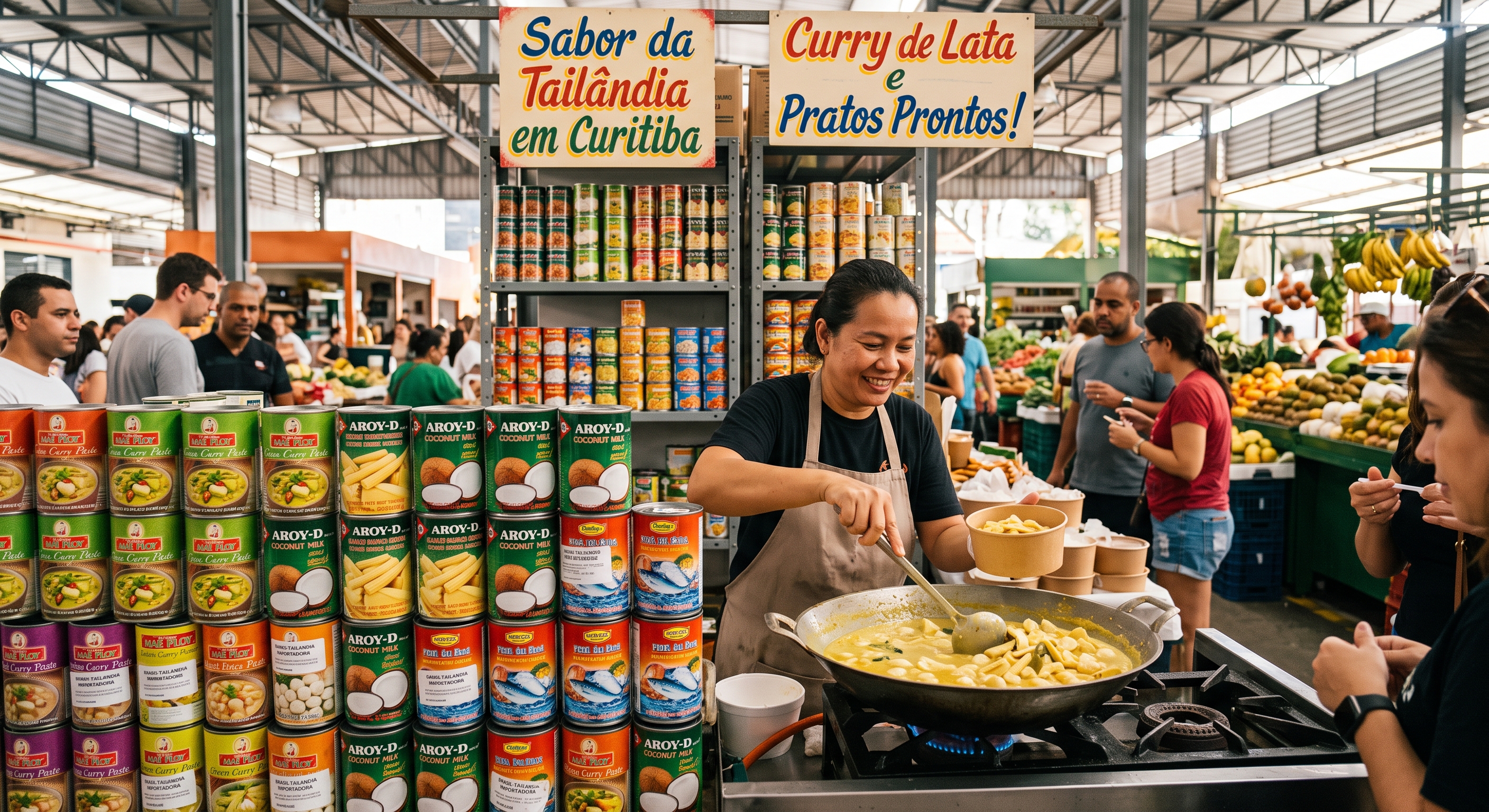
Thailand has spent four decades earning its nickname as the "kitchen of the world." It is the planet's largest exporter of canned tuna and canned pineapple, and its processed-food industry shipped record values again last year. As geopolitical shocks hit traditional destinations in the Middle East, Thai packers are actively looking for new demand — and Brazil, with 215 million consumers and a deep retail sector, is one of the most logical next stops.
Why Thailand, and why now
Thai processors combine scale, certified quality (BRC, IFS, HACCP, Dolphin Safe) and aggressive pricing across a portfolio that goes far beyond tuna and pineapple: coconut milk and cream, canned tropical fruit, sweetcorn, sardines and mackerel, ready-to-eat curries and pet food. With freight and demand disrupted in Middle Eastern markets this year, Thai exporters are offering competitive terms to buyers who can open new corridors — a window for Latin American importers willing to move first.
The regulatory gateway
Brazil protects its food market carefully, and the paperwork is where most projects die. Three checkpoints define the route:
- ANVISA registration. Shelf-stable foods require product and facility registration with the health authority; labels must be in Portuguese and follow RDC rules on nutrition facts, allergens and shelf life.
- MAPA oversight for animal protein. Canned tuna, sardines and chicken also fall under the Ministry of Agriculture — the Thai plant must be habilitated for export to Brazil, a process that can take months and should start before any purchase order.
- Import licensing and radar. The Brazilian importer needs habilitação in Siscomex and, for some categories, an import license (LI) before shipment.
Tariffs and the real landed cost
Thailand is outside Mercosur, so the Common External Tariff applies: canned tuna enters around 16%, canned pineapple roughly 14–16%, coconut milk near 10%. On top of the II come IPI, PIS/COFINS-Imports and state ICMS — which is why the final shelf price can be double the FOB value. Importers should model the full stack (and the ICMS substituição tributária where it applies to food) before committing to a price point. Ports like Santos and Paranaguá offer regular services from Laem Chabang with transit times of roughly 30 to 40 days.
How to enter: private label first
The fastest lane into Brazil is not building a brand — it is supplying the brands that already exist. Brazilian retail chains and wholesalers are expanding private-label canned lines, and Thai packers are flexible on formats and labels. Food fairs such as APAS Show and FISPAL Food Service concentrate the buyers that matter. Our recommendation: enter with two or three SKUs where Thailand has unbeatable cost-quality (tuna chunks, coconut milk, pineapple slices), prove rotation, and only then consider branded lines.